Educational tools
other
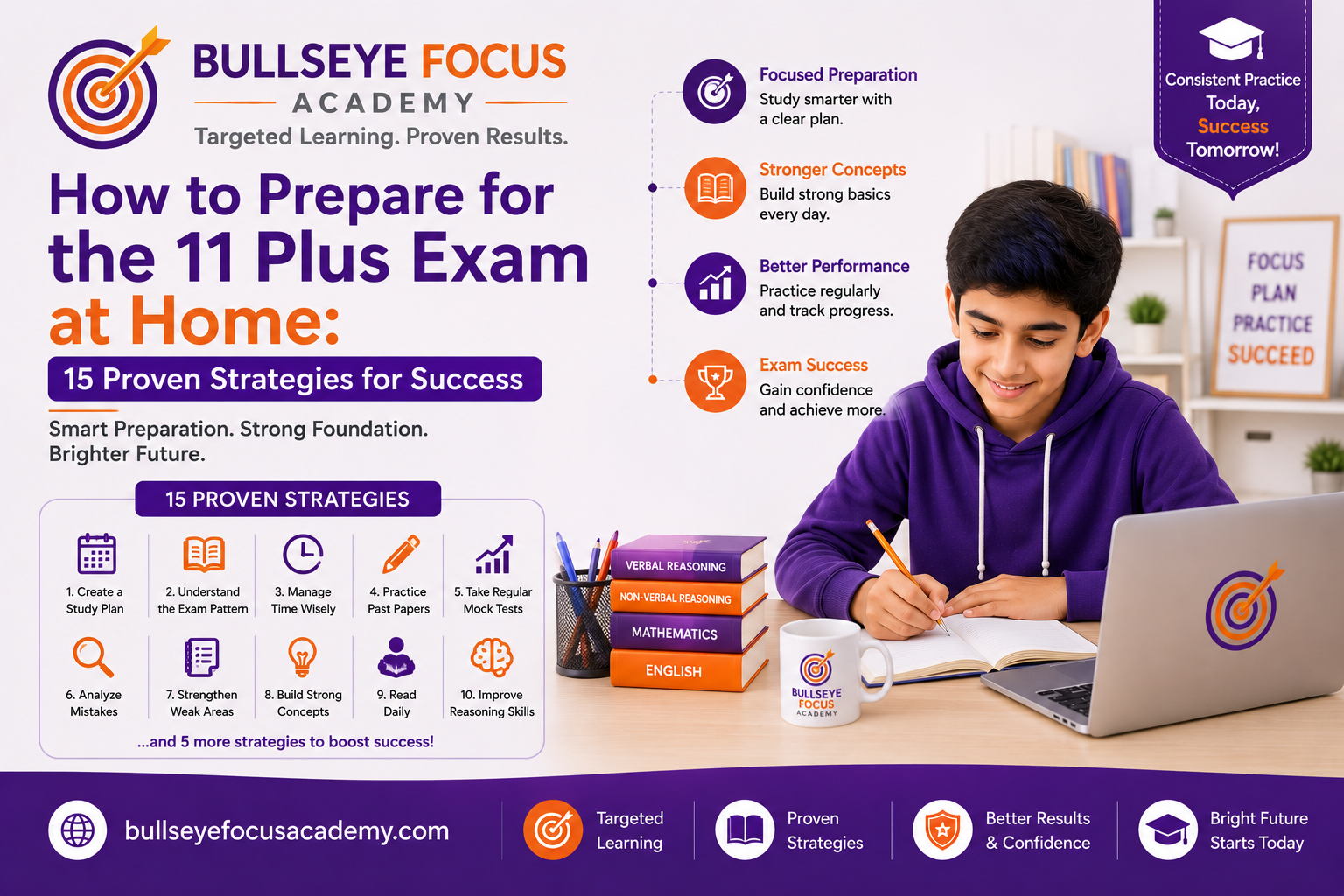
How to Prepare for the 11 Plus Exam at Home: 15 Proven Strategies for Success

# How to Prepare for the 11 Plus Exam at Home: 15 Proven Strategies for Success

## How to Prepare for the 11 Plus Exam at Home: 15 Proven Strategies for Success
Preparing for the 11 Plus exam can feel overwhelming for both parents and students. Many families wonder whether it is possible to achieve strong results without expensive tutoring or intensive classroom programs. The good news is that effective 11 Plus Preparation can absolutely be done at home with the right strategy, consistency, and support.
Every year, thousands of parents search online for advice about preparing their child for grammar school entrance exams. Common questions include when preparation should start, how many hours children should study, whether mock exams are necessary, and what subjects require the most attention. These questions are important because the 11 Plus exam is highly competitive and often plays a significant role in grammar school admissions.
Successful 11 Plus Preparation is not simply about studying harder. It involves developing strong learning habits, building confidence, improving reasoning skills, and becoming familiar with exam conditions. Children who prepare in a structured and consistent way often feel more comfortable and perform better when the real examination arrives. Parents do not need to become teachers to help their children succeed. By creating a positive learning environment, encouraging regular practice, and following a clear study plan, families can support effective preparation from home.
For families looking for additional academic support, educational resources and preparation programmes can be explored at [https://bullseyefocusacademy.com/](https://bullseyefocusacademy.com/) and learning materials are available through [https://bullseyefocusacademy.com/shop/](https://bullseyefocusacademy.com/shop/).
### Why 11 Plus Preparation Is Important
The 11 Plus examination is designed to assess a child’s academic potential and readiness for selective education. Unlike standard school assessments, it often includes challenging reasoning questions and timed sections that require strong problem-solving skills. Many students are capable of answering questions correctly when given unlimited time. However, the pressure of working under exam conditions can make even strong students feel nervous. This is why structured 11 Plus Preparation is so valuable.
Benefits of effective preparation include:
- Improved confidence
- Better time management
- Stronger problem-solving abilities
- Enhanced reasoning skills
- Reduced exam anxiety
- Greater familiarity with exam formats
Preparation also helps children develop study habits that can benefit them throughout secondary school and beyond.
### When Should 11 Plus Preparation Start?
One of the most common questions parents ask is when preparation should begin. There is no single answer because every child develops at a different pace. However, many education specialists recommend beginning structured 11 Plus Preparation between Year 4 and the start of Year 5.
Starting early provides several advantages:
- Less pressure close to the exam
- More time to strengthen weak areas
- Opportunity to build confidence gradually
- Better long-term retention of knowledge
Children who start preparation too late may feel rushed and stressed. Beginning early allows learning to take place in a calm and manageable way. Parents should remember that 11 plus preparation does not need to be intensive from the start. Early stages can focus on reading, vocabulary building, and developing reasoning skills before moving into more exam-specific practice.
### Understanding the 11 Plus Exam Format
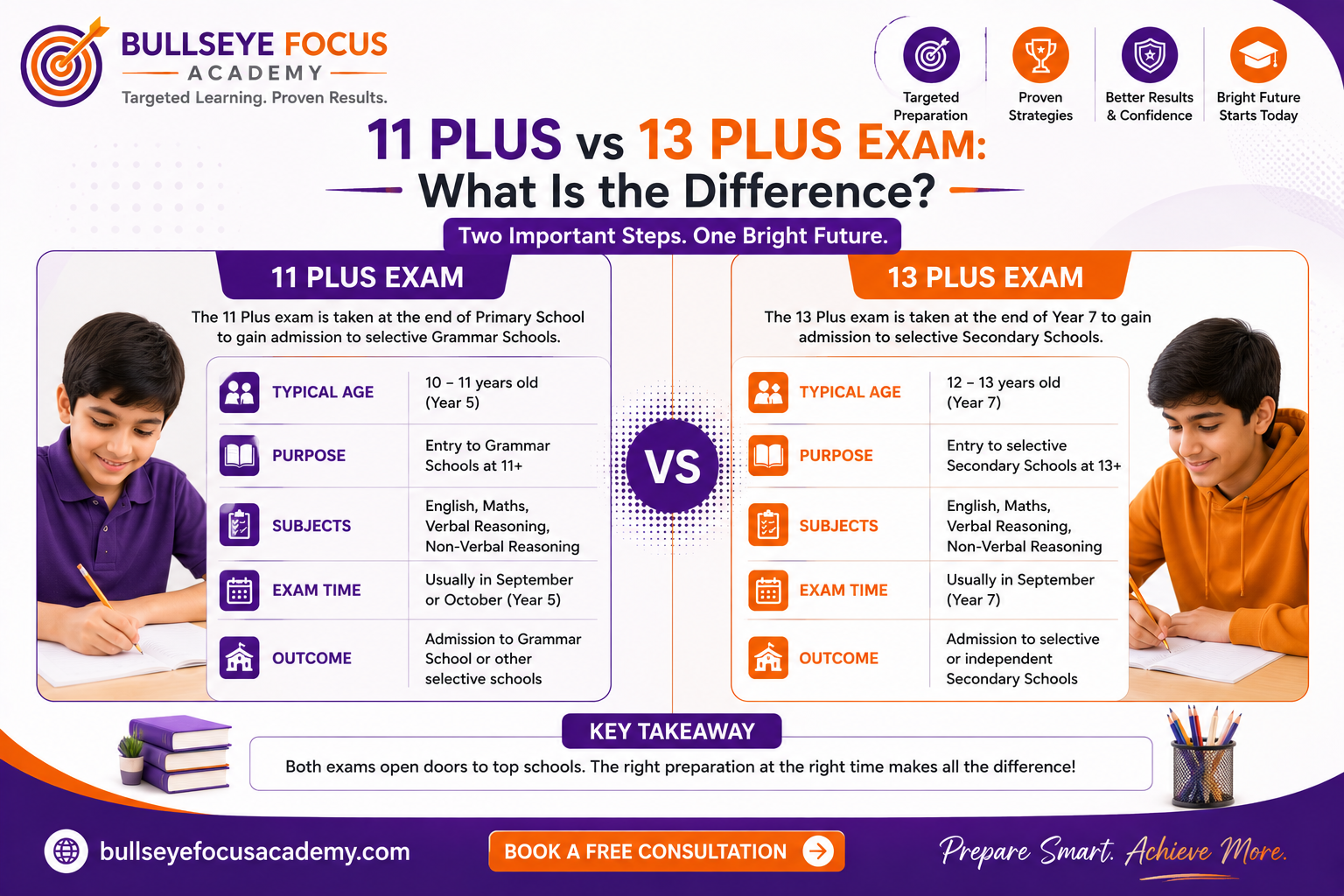
Before beginning a study plan, it is important to understand what the examination may include. The exact format varies between schools and examination providers, but many 11 Plus assessments contain:
- English
- Mathematics
- Verbal Reasoning
- Non-Verbal Reasoning
Some schools may place greater emphasis on particular subjects, while others use a broader assessment approach.
Official information about assessment frameworks can be found through the official GL Assessment website at [https://www.gl-assessment.co.uk/](https://www.gl-assessment.co.uk/).
Understanding the structure of the exam helps parents focus preparation on the most relevant skills.
### Create a Structured Study Schedule
One of the most effective ways to improve 11 Plus Preparation is by creating a realistic study schedule. Children generally perform better when learning is consistent rather than intensive. Short, focused sessions are often more effective than occasional long study periods.
A simple schedule might include:
- Monday: English practice
- Tuesday: Maths revision
- Wednesday: Verbal reasoning
- Thursday: Non-verbal reasoning
- Friday: Vocabulary building
- Weekend: Practice paper or review session
The goal is to create a routine that becomes part of the child’s normal week. Consistency often produces better results than studying for long hours.
### Strengthen English Skills
English plays a significant role in many 11 Plus examinations.
Students may be assessed on:
- Reading comprehension
- Vocabulary
- Grammar
- Spelling
- Writing skills
Parents can support English development by encouraging regular reading.
Useful reading materials include:
- Fiction books
- Newspapers
- Educational magazines
- Classic children’s literature
Reading regularly exposes children to new vocabulary and improves comprehension skills naturally. Vocabulary development is particularly important because many verbal reasoning questions rely on a strong understanding of language.
### Improve Mathematical Understanding
Mathematics is another key component of 11 Plus Preparation.
Children should feel comfortable with topics such as:
- Addition and subtraction
- Multiplication and division
- Fractions
- Decimals
- Percentages
- Problem-solving
- Mental arithmetic
Parents can support learning by encouraging regular practice and discussing real-life mathematical situations.
For example:
- Calculating shopping totals
- Measuring ingredients while cooking
- Estimating travel times
Making mathematics part of everyday life helps children develop confidence and practical understanding.
### Develop Verbal Reasoning Skills
Verbal reasoning questions assess a child’s ability to understand and work with language-based information.
These questions often involve:
- Word relationships
- Synonyms and antonyms
- Letter patterns
- Logical sequences
- Vocabulary understanding
Verbal reasoning can be challenging for students who have limited vocabulary exposure.
Ways to improve verbal reasoning include:
- Reading regularly
- Learning new words daily
- Playing word games
- Completing reasoning exercises
- Discussing meanings of unfamiliar words
Regular practice helps students become familiar with common question types.
### Build Non-Verbal Reasoning Ability
Non-verbal reasoning focuses on patterns, shapes, and visual problem-solving.
Students may encounter questions involving:
- Shape sequences
- Rotations
- Reflections
- Spatial awareness
- Pattern recognition
Many children initially find non-verbal reasoning unfamiliar because it differs from traditional school subjects. Improvement usually comes through regular exposure and practice.
Parents can help by encouraging activities that develop visual thinking skills, such as:
- Puzzles
- Construction toys
- Pattern games
- Logic challenges
These activities strengthen the same skills assessed in many non-verbal reasoning questions.
### Use Timed Practice Sessions
Knowledge alone is not enough for success in the 11 Plus Preparation. Students must also learn to work efficiently under time pressure.
Timed practice sessions help children:
- Imp
This brief was generated from the original reporting. Read the full article at the source:
Read at bullseyefocusacademy.com
Bullseye Academy