Educational tools
product
link to Thor Young’s Trader Strategy: Unlocking the Power of Psychology and Pivot Points
 Forexinrs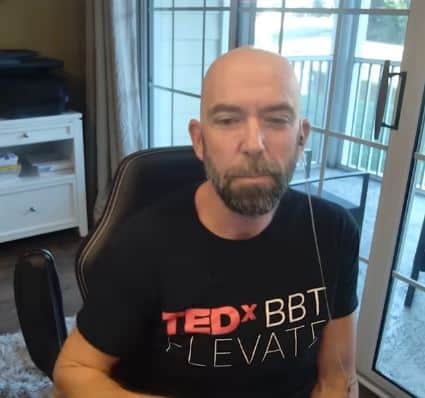

Etienne Crete - Desire To TRADE165K subscribers
[Watch on](https://www.youtube.com/watch?v=daZn1tc6OM8)
[BEST BROKERS REVIEWS](https://www.forex.in.rs/go/best-brokers)
[Trillion Dollar Club - Invest & Trade Stocks, Crypto, Forex](https://www.forex.in.rs/go/trillion-dollar-ava)
In this post, you’ll learn how Thor Young’s trading strategy integrates psychological principles with technical analysis. He highlights the importance of focusing on your mental approach and sticking to a consistent trading plan, which can help you achieve greater consistency in profits. Thor also shares his unique use of pivot points, which he believes provide more reliable results than traditional methods, allowing traders to make better decisions with less stress. Whether you’re a beginner or an experienced trader, Thor’s insights can inspire you to refine your strategy and push through the mental challenges that every trader faces.

## **Thor Young Playbook & Strategy: How He Actually Trades**
## The Importance of Trading Psychology
Thor emphasizes the mental side of trading, which he believes is the key to long-term success. Rather than just focusing on charts and patterns, Thor’s strategy incorporates the psychological elements that often determine whether a trader succeeds or fails. In this section, we’ll look at how focusing on psychology can make all the difference in your trading.
- **Rule #1: Focus on Process, Not P&L**
- Don’t worry about how much money you’re making or losing during the trade. Focus on executing your strategy correctly.
- Treat every trade like a system that you can repeat daily. The goal is to follow your plan, not to worry about the result.
- **Rule #2: Separate Your Trading Self from Your Emotional Self**
- Imagine you are trading on behalf of someone else. This helps remove emotional attachment to the trade and forces you to stick to your plan.
- Write down your strategy and goals for each trade. Stick to these guidelines like a business plan.
- **Rule #3: Accept Losses as Part of the Game**
- Understand that losses are inevitable. The goal is to manage them well, not avoid them entirely.
- The key to overcoming losses is developing the mental strength to accept them and move on without them affecting your next trade.
## Using Pivot Points to Find High-Probability Trades
Thor uses pivot points to guide his trades. A pivot point is a price level that traders use to gauge the market’s direction. Thor’s approach to these levels has been fine-tuned to take advantage of large, profitable moves while reducing the number of trades he takes. In this section, we’ll dive into how to use pivot points effectively.
- **Rule #4: Identify Key Support and Resistance Levels**
- Look for major pivot points—these are key price levels where the market has historically reversed direction.
- Focus on levels from the previous day or week, as they are often the most reliable.
- **Rule #5: Use Larger Time Frames for Pivot Analysis**
- For more reliable entries, use longer time frames like 30-minute or 1-hour charts to spot pivot points, rather than looking for signals on smaller time frames.
- This helps you avoid the noise from smaller market fluctuations and gives you more time to react.
- **Rule #6: Wait for Price to Approach These Levels**
- Don’t trade until the price is near the pivot points. Once it gets close, watch for confirmation through other indicators like volume or momentum.
- Enter the trade when the price breaks the pivot level in the direction you want to trade.
## Focusing on High-Reward, Low-Stress Trading
Thor prefers to go after larger, more stable moves in the market rather than making small, high-frequency trades. This helps him avoid stress and focus on a smaller number of trades with greater potential. Here’s how you can implement a similar approach.
[TRADINGVIEW PRO AD-FREE CHARTS](https://www.forex.in.rs/banner/tradingview-pro)
- **Rule #7: Go for Larger Profit Targets**
- Focus on capturing a larger portion of the market move. For example, if a stock typically moves $10 a day, try to capture $7-$8 of that movement.
- Set your targets based on the average true range (ATR) of the stock or asset you’re trading.
- **Rule #8: Keep Risk Low and Size Small**
- Don’t risk too much on any single trade. Keep your position sizes smaller to manage your risk effectively.
- This allows you to stay in the game longer and take advantage of big moves without the fear of losing everything on a single bad trade.
- **Rule #9: Don’t Get Overexposed to the Market**
- Limit yourself to just a few trades a day. Thor typically only takes 1 or 2 trades a day, which minimizes the chances of making poor decisions due to overtrading.
- This also means you’ll need to be patient and wait for the best setups to come to you.
## Transitioning from Smaller to Larger Positions
One of the key transitions Thor faced was moving from smaller, low-risk trades to larger positions that could potentially yield higher returns. This required mental discipline and a deeper understanding of his own risk tolerance. Here’s how Thor teaches traders to make that transition smoothly.
- **Rule #10: Don’t Rush to Trade Larger Sizes**
- Start small and gradually increase your position size as you gain confidence and experience. Ramping up too quickly can result in significant drawdowns.
- Ensure that you’re consistently profitable with smaller positions before scaling up.
- **Rule #11: Pay Attention to Market Conditions**
- Only trade larger positions when market conditions are favorable. Thor prefers to trade when there is enough volatility to allow for bigger moves but not so much volatility that it becomes unpredictable.
- Track your trades over time and see if your larger trades are consistently profitable. If not, scale back until you improve your strategy.
## Sticking to the Plan and Avoiding Overthinking
Thor advocates for a structured approach where you follow your pre-defined trading plan without constantly second-guessing yourself. This ensures that your trading is disciplined and doesn’t get swayed by emotions or market noise.
- **Rule #12: Have a Defined Trading Plan for Every Trade**
- Write down what your plan for each trade will be: entry point, exit target, stop-loss, and risk.
- Stick to this plan and resist the urge to make impulsive decisions based on short-term market moves.
- **Rule #13: Evaluate Trades After the Fact, Not During**
- Avoid analyzing your trades while they are live. Instead, review them after the market closes to see what went well or wrong.
- This prevents emotional decision-making during the trade and helps you stay disciplined.
## Mastering the Mental Game: Why Trading Psychology Makes or Breaks Success
Thor Young believes that the most significant factor in trading success isn’t just about strategy or technical analysis—it’s about mastering your mind. In his experience, psychology plays a pivotal role in turning a trader from a novice to a consistent performer. Early on, he struggled with the emotional ups and downs of trading, which often led to poor decisions. However, over time, he learned to detach from the outcome of each trade and focus solely on executing his plan with discipline. This shift in mindset allowed him to start seeing more consistent results and gain greater confidence in his approach.
One of the key lessons Thor shares is that trading should be treated like a business, where decisions are made based on rules and not on emotions. Thor’s approach involves sticking to a defined process, whether the trade is winning or losing. He emphasizes that traders must separate their emotional reactions from their decision-making process to avoid impulsive d
This brief was generated from the original reporting. Read the full article at the source:
Read at forex.in.rs