Educational tools
other
Academic Confidence for Students: Why It Is Important
 Bullseye Academy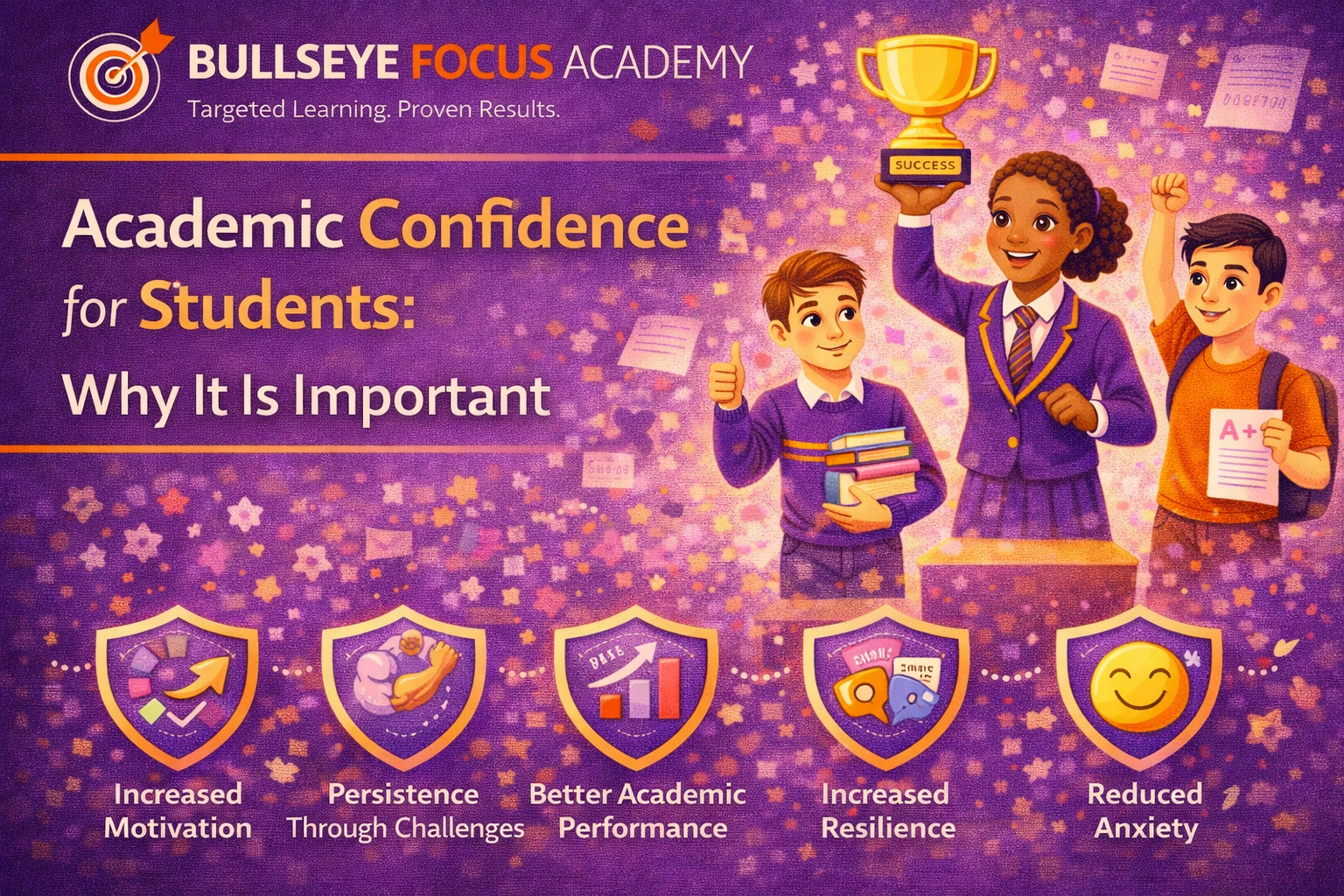
# Academic Confidence for Students: Why It Is Important

## Academic Confidence for Students: Why It Is Important
Academic confidence for students is one of the most important factors influencing school performance, learning motivation, and exam success. Many parents search for ways to improve their child’s confidence because even capable students sometimes doubt their abilities. A lack of confidence can prevent children from participating in class, asking questions, attempting challenging tasks, and performing well in exams. Academic confidence is not simply about believing that you are smart. It is about trusting your ability to learn, improve, solve problems, and overcome challenges through effort and practice. Students with strong confidence tend to approach learning with a positive attitude and are more willing to take responsibility for their progress.
In today’s competitive educational environment, children face pressure from school assessments, homework, exams, and comparisons with peers. Without confidence, students may feel overwhelmed and lose motivation. This is why parents increasingly search for practical ways to develop academic confidence for students. When students believe in their abilities, they participate more actively in lessons, complete assignments with greater enthusiasm, and handle academic setbacks more effectively. Confidence creates a positive cycle where achievement builds belief, and belief encourages further achievement.
### What Is Academic Confidence for Students and Why Parents Search for It
Academic confidence for students refers to a child’s belief in their ability to understand subjects, complete academic tasks, and achieve educational goals. It influences how students approach learning, revision, exams, and classroom participation.
Parents search for academic confidence for students because they want their children to:
- Feel positive about learning
- Participate actively in class
- Improve exam performance
- Reduce fear of making mistakes
- Develop independent learning habits
- Build resilience during challenges
Many children possess the knowledge and skills needed to succeed academically, but a lack of confidence can prevent them from participating actively, answering questions, and performing to their full potential in exams and classroom activities.
### 9 Powerful Benefits of Academic Confidence for Students
###### Better Classroom Participation
Confident students are more willing to answer questions, share ideas, and engage in discussions.
###### Improved Academic Performance
Students who believe in themselves often achieve better results because they approach learning positively.
###### Reduced Exam Anxiety
Confidence helps students remain calm and focused during tests and assessments.
###### Stronger Problem-Solving Skills
Confident learners are more willing to tackle difficult questions and challenges.
###### Better Communication Skills
Students become more comfortable expressing ideas and asking for help when needed.
###### Increased Motivation
Confidence encourages students to set goals and work consistently toward achieving them.
#### Greater Resilience
Students recover more quickly from mistakes and setbacks when they trust their abilities.
###### Improved Independent Learning
Confident children take greater responsibility for their studies and personal development.
###### Positive Attitude Towards Education
Students with confidence view learning as an opportunity rather than a source of stress.
### Why Some Students Lack Academic Confidence
Many children struggle with confidence for various reasons, including fear of failure, academic pressure, negative comparisons, past difficulties in learning, and a lack of encouragement. These challenges can affect motivation, participation, and overall academic performance.
###### Fear of Failure
Students may avoid challenges because they worry about making mistakes.
###### Negative Comparisons
Comparing themselves to classmates can reduce self-esteem.
###### Previous Academic Difficulties
Past struggles may cause students to doubt their abilities.
###### Excessive Pressure
Too much focus on grades can create anxiety and reduce confidence.
###### Lack of Positive Feedback
Children need encouragement to recognize their strengths and progress.
Understanding these causes helps parents support confidence development more effectively.
### 7 Effective Ways to Build Academic Confidence for Students
Parents can help children strengthen confidence using practical strategies such as encouraging effort, celebrating small achievements, setting realistic goals, providing positive feedback, and creating a supportive learning environment. Consistent encouragement helps students believe in their abilities, overcome challenges, and develop the confidence needed for academic success and personal growth.
###### Celebrate Small Achievements
Recognizing progress motivates students to continue improving.
###### Encourage a Growth Mindset
Teach children that abilities improve through practice and effort.
###### Focus on Effort, Not Just Results
Praise hard work and persistence instead of only high grades.
###### Create Realistic Goals
Achievable goals build momentum and confidence over time.
###### Encourage Questions
Students should feel comfortable asking questions and seeking clarification.
###### Provide Consistent Support
A supportive home environment improves emotional security and learning confidence.
###### Promote Independent Learning
Allow children to solve problems and make decisions independently.
### How Academic Confidence Improves Exam Performance
Academic confidence for students directly affects exam preparation and results by improving focus, motivation, time management, and the ability to handle exam pressure calmly and effectively.
Students with confidence:
- Revise more effectively
- Attempt challenging questions
- Manage exam pressure better
- Stay focused during assessments
- Recover from mistakes quickly
- Perform more consistently
Confidence does not replace preparation, but it helps students use their knowledge more effectively during exams.
Parents can support structured learning through internal resources available at:
- [https://bullseyefocusacademy.com/](https://bullseyefocusacademy.com/)
- [https://bullseyefocusacademy.com/shop/](https://bullseyefocusacademy.com/shop/)
Students can also strengthen academic skills through educational resources such as:
- [https://www.khanacademy.org](https://www.khanacademy.org/)
- [https://www.bbc.com/bitesize](https://www.bbc.com/bitesize)
### Psychological Benefits of Academic Confidence for Students
Academic confidence supports emotional well-being alongside educational achievement by reducing stress, improving self-esteem, increasing motivation, and helping students approach learning challenges with a positive and resilient mindset.
Students experience:
- Reduced stress levels
- Better emotional resilience
- Greater self-esteem
- Improved motivation
- More positive learning attitudes
These benefits contribute to both academic and personal growth.
### Common Mistakes Parents Should Avoid
Some parenting habits can unintentionally reduce confidence by creating pressure, encouraging comparisons, focusing only on results, or being overly critical. Supportive guidance, realistic expectations, and positive encouragement help children build stronger self-belief and academic confidence.
###### Comparing Children to Others
Every child develops at a different pace.
###### Focusing Only on Grades
Students need recognition for effort as well as results.
###### Overprotecting Children
Allowing children to solve problems independently builds confidence.
###### Criticis
This brief was generated from the original reporting. Read the full article at the source:
Read at bullseyefocusacademy.com